
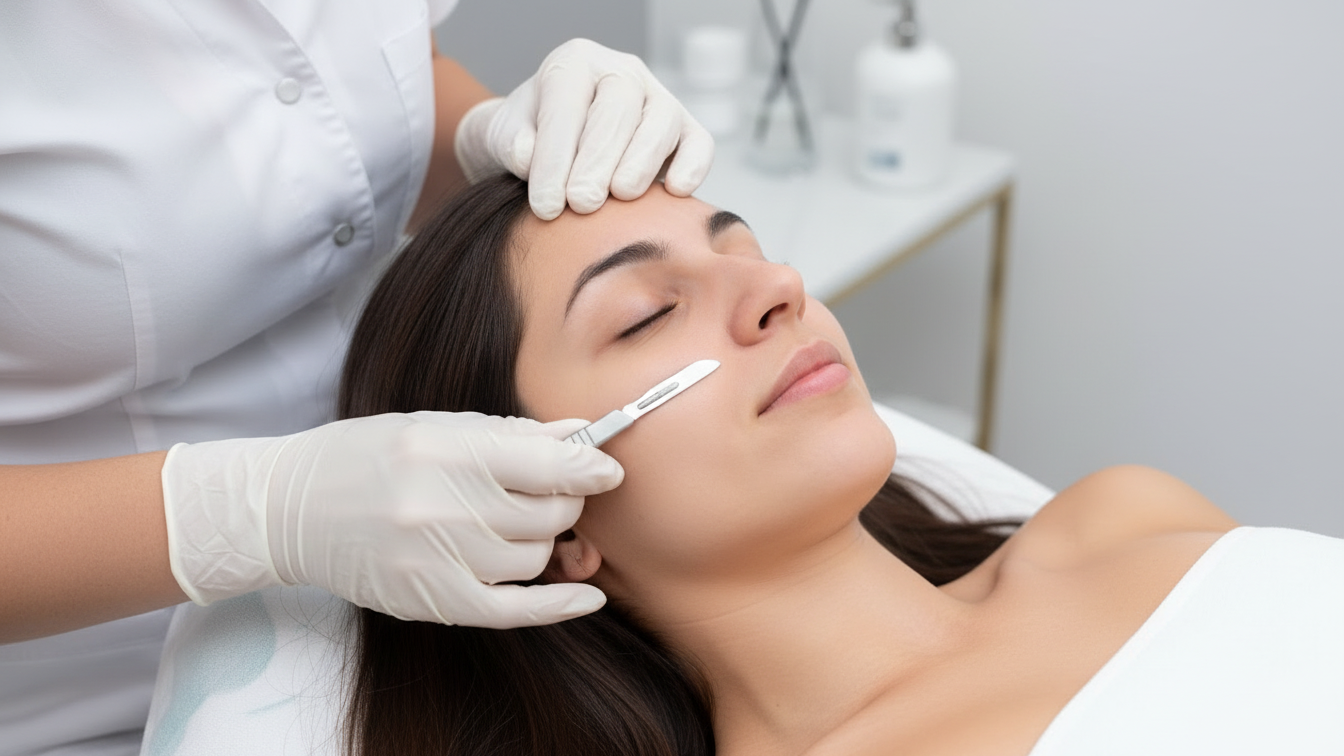
facial TRAINING
dermaplaning TRAINING
This one-to-one Dermaplaning course is designed for qualified facial therapists who wish to add an advanced exfoliation treatment to their service menu.
Dermaplaning requires precision, correct blade handling, and a thorough understanding of skin suitability. Delivered on a private basis, this course allows close observation of technique, detailed explanation, and real-time correction to ensure safe and confident practice.
The training focuses not only on how to perform dermaplaning, but on understanding skin preparation, treatment suitability, and post-treatment care to achieve optimal results.
Who This Course Is For
This course is suitable for therapists who:
are already qualified in facial treatments
have a basic understanding of skin and skincare
want to safely introduce dermaplaning into their clinic
prefer detailed, one-to-one training over group delivery
This is an advanced course and is not suitable for complete beginners.
Pricing: £399
(A £100 booking fee is required to secure your training date. The remaining balance can be paid on the day of your course or added at checkout if you prefer to pay in full.)
SUITABLE FOR
-
Training format: One-to-One
Duration: Half day
Suitable for: Qualified facial therapists
Accreditation: Course Accreditation
Model required: Yes (see details below)
Price: £399
-
Professional Considerations
Health, safety, and professional standards
Client consultation and suitability assessment
Contra-indications and contra-actions
Insurance and treatment positioning
Skin & Treatment Knowledge
Understanding the dermaplaning process
Skin types and conditions suitable for treatment
When dermaplaning should not be performed
Managing client expectations and results
Dermaplaning Technique
Blade types and correct handling
Skin preparation and positioning
Correct angle, pressure, and stroke technique
Working methodically across the face
Integrating dermaplaning into a facial treatment
Aftercare & Results
Post-treatment skin response
Aftercare advice and product recommendations
Treatment frequency and maintenance
Combining dermaplaning with other facial treatments
-
Prior to attending the course, you will be sent a short pre-course information pack.
This is designed to:
familiarise you with key terminology
introduce basic theory and safety concepts
allow more time on the day for practical learning
The pre-course reading is supportive and straightforward. There is no assessment or testing involved.
-
A model is required for this course.
Students are responsible for providing their own model
The model must be available for the full training day
Full guidance will be provided in advance regarding suitability and preparation
Working on a live model allows technique, pressure, and skin response to be assessed accurately, helping build confidence from day one.
-
One of the benefits of one-to-one training is the opportunity to discuss the practical side of starting out professionally.
As part of this course, time is set aside to cover essential business guidance, helping you feel clearer and more confident about your next steps after training.
This includes:
Understanding insurance and accreditation
Setting up as a skin specialist
Treatment pricing and positioning
Working safely and professionally
Building confidence as a beginner
Avoiding common early mistakes
You will also receive supporting resources to guide you beyond the training day.
This guidance is based on decades of industry experience and is designed to give beginners clarity, reassurance, and realistic direction — not pressure or overwhelm.
One-to-One Training
All training is delivered on a one-to-one basis. This means the pace, structure and depth of the day can be adapted to your individual needs.
Private training allows:
focused support
personalised guidance
a calm learning environment
time to build confidence without pressure
This approach is particularly beneficial for beginners who may feel overwhelmed in group settings.
-
On successful completion, you will receive fully accredited certification.
Ongoing support is part of your training, and guidance is always available should you need advice as you begin working professionally.
Accreditation: Course Accreditation